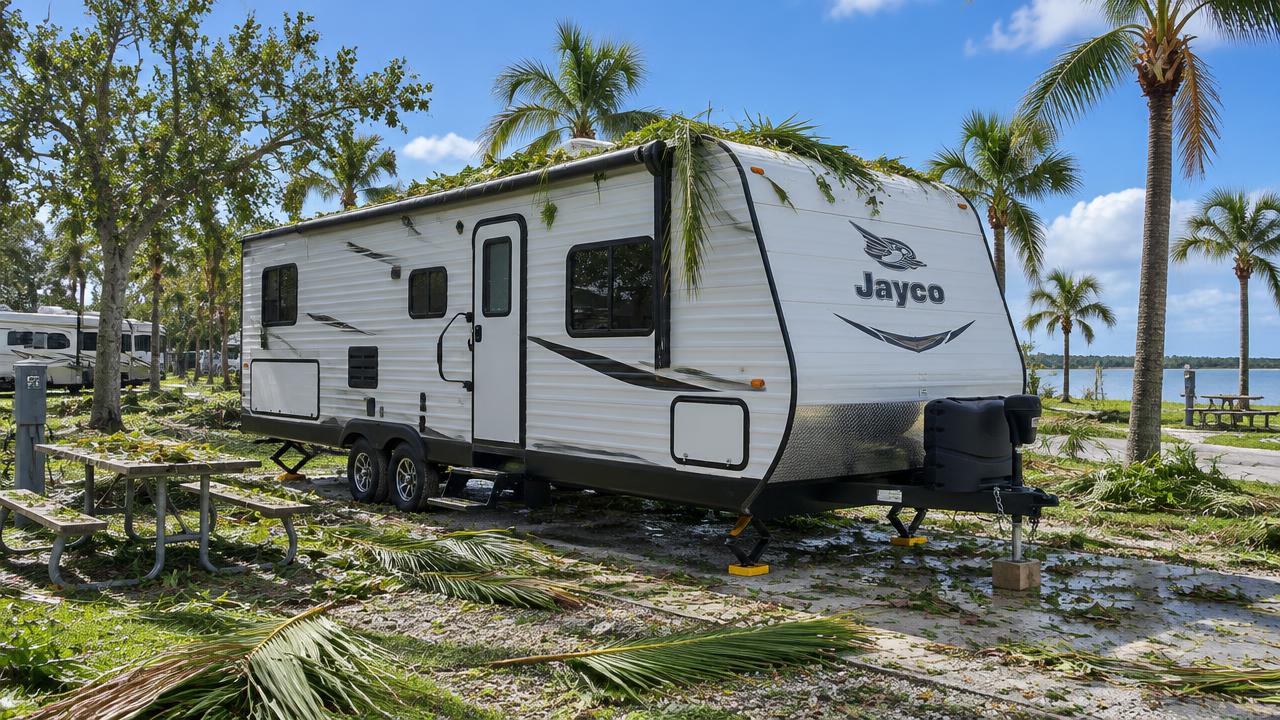
Summer thunderstorms, tropical systems and windy cold fronts all hit the Nature Coast. Even when an RV comes through without damage, it's usually left covered in leaves, branches, sand, pollen and, near the Gulf, a layer of salt spray. If that sits, it leads to stains, mildew and corrosion.
Safety first: if your RV may have structural, electrical or roof damage, have it inspected by an RV repair technician before anything else. Cleaning comes after it's safe.
Step 1: Clear the roof and the edges
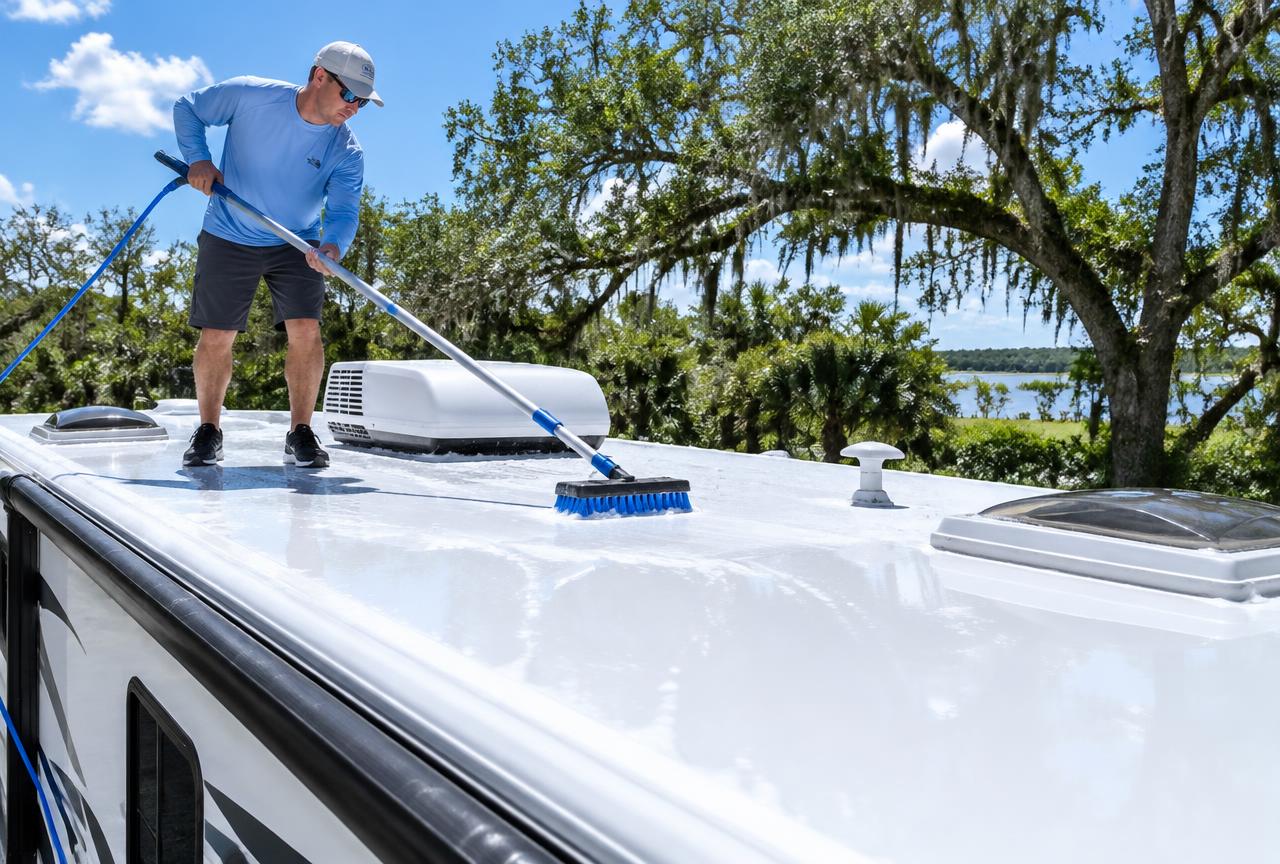
Branches and leaves collect around vents, the A/C shroud, solar panels and the gutter rails. Wet debris holds moisture against seams and stains the roof surface.
- Remove loose debris by hand or with a soft broom.
- Check that vents and drains aren't blocked.
- Wash the roof with a cleaner suited to your roof type.
- While it's clean, look at the seams. Anything cracked or lifted should go to an RV repair tech.
This is the most dangerous part for owners on a ladder. Our RV roof cleaning service takes care of it.
Step 2: Rinse off salt spray
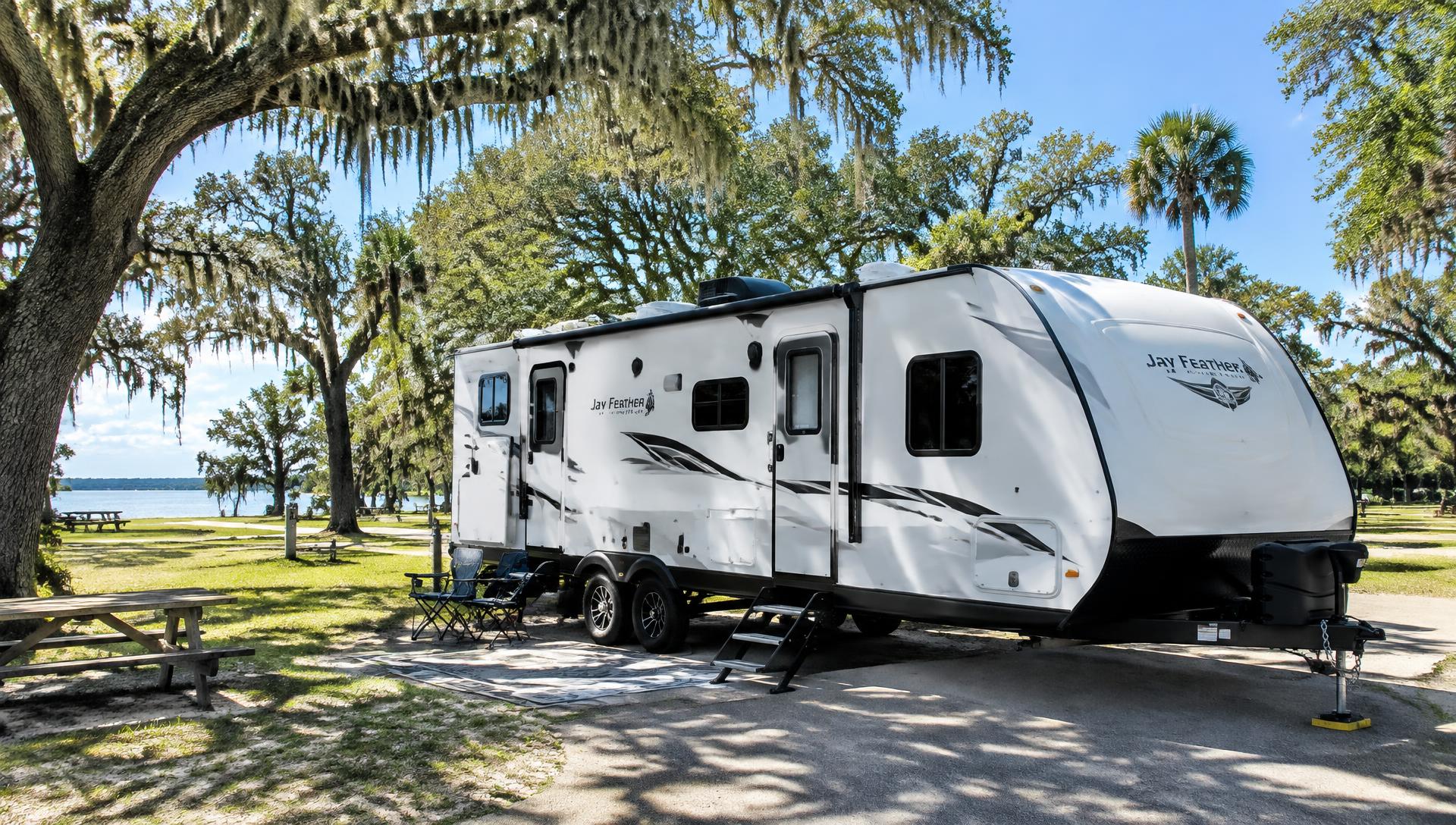
Near Homosassa, Crystal River and Inglis, storm winds carry salty air inland. Salt left on the body, the frame, the steps and the hitch speeds up corrosion and leaves a dull film on fiberglass.
- Rinse the whole RV with fresh water, top down.
- Pay attention to the undercarriage, wheels, steps and metal trim.
- Follow with a full wash to remove what a rinse leaves behind.
Step 3: Deal with stains and streaks
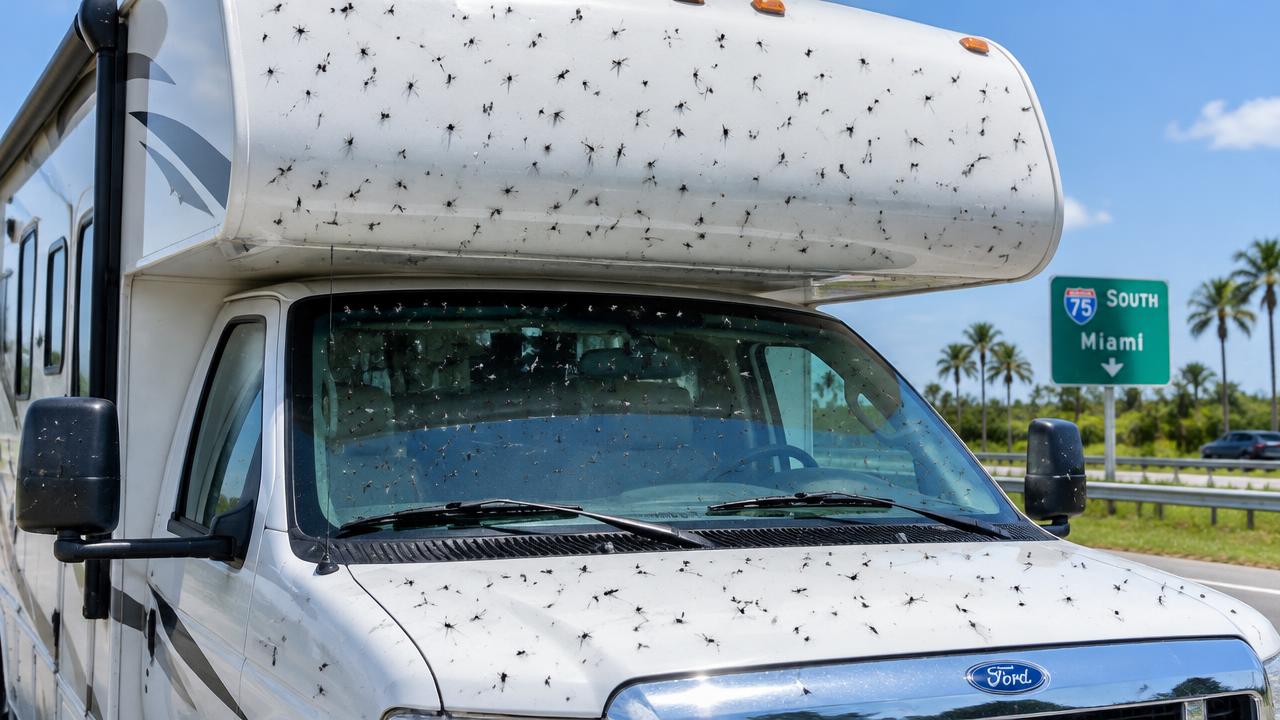
Storms often leave muddy streaks down the sides and dark lines under the roofline and window frames. Those come off easiest right after the storm. Once they dry and bake in, they may need black streak removal and a polish.
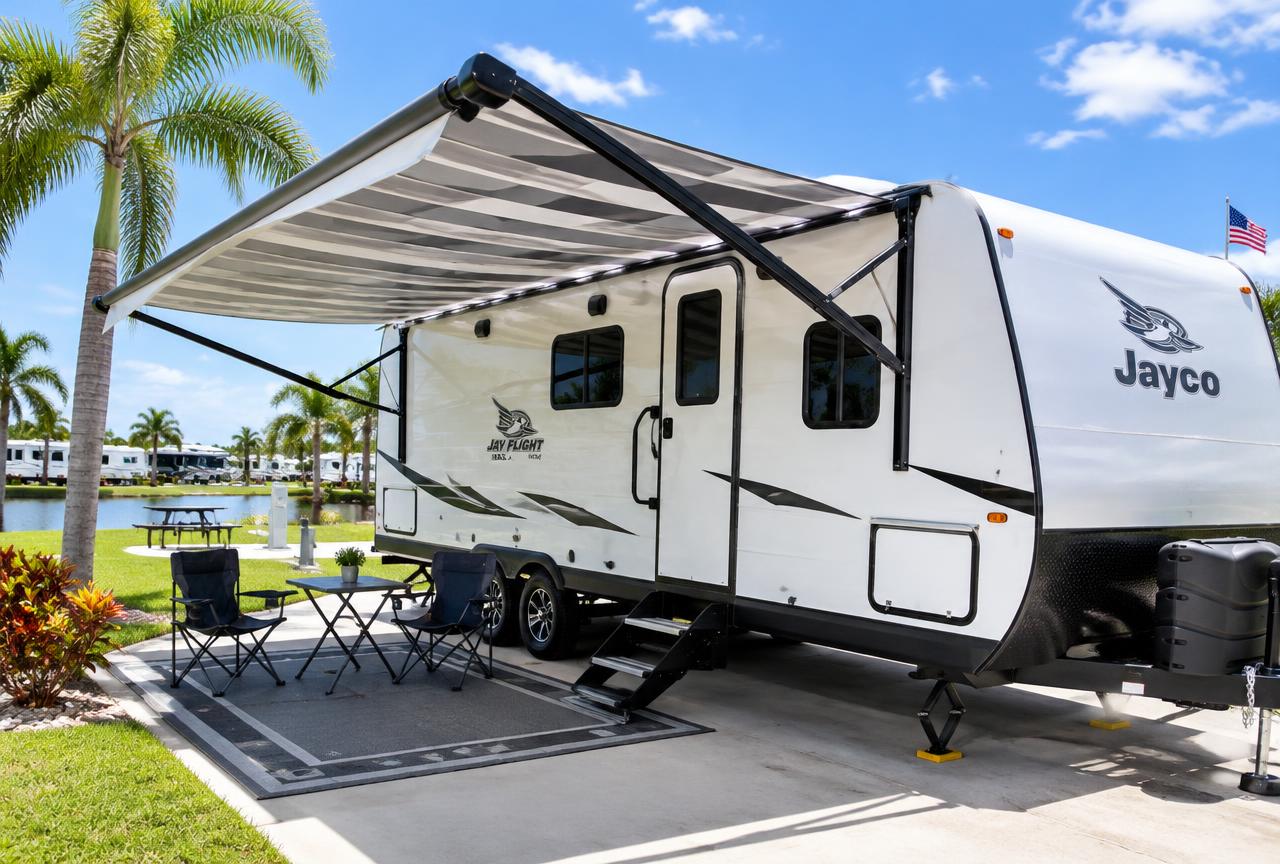
Check the awning too. If it was rolled up wet, open it on a dry day, clean it and let it dry fully before rolling it back. Mildew starts fast in our humidity. See awning cleaning.
Step 4: Dry out the inside
Even a small amount of water that blew in through a vent or window can lead to a musty smell within days.
- Open vents and windows on a dry day, or run the A/C to pull humidity down.
- Check carpets and cushions near windows and doors for dampness.
- Wipe down surfaces, and empty and dry the fridge if power was out.
- Look for water stains on the ceiling or walls and report them to a repair tech.
If the interior smells musty or needs a deep clean, our interior detailing covers carpet, upholstery, kitchen and bath.
Step 5: Protect the finish again
Storm grit and a lot of rain can wear down wax. After the cleanup, a fresh coat of wax or sealant puts the protection back before the sun returns.
Quick storm checklist
- Inspection first if there's any chance of damage.
- Roof debris off, vents clear.
- Fresh-water rinse for salt.
- Streaks and awning cleaned while fresh.
- Interior dried out.
- Wax or sealant back on.
Letta Clean RV Detailing comes to your RV park, storage lot or driveway around the Nature Coast. Call (833) 486-7394 after the weather clears.
Quick answers
As soon as it's safe. Salt, mud and wet debris do the most harm when they sit for days.
Not completely. A proper fresh-water rinse and wash removes the film rain leaves behind.
No, we clean and detail. For leaks, seams or damage, we recommend an RV repair technician first.